
2026 EU Poultry Import Regulations: Complete Guide
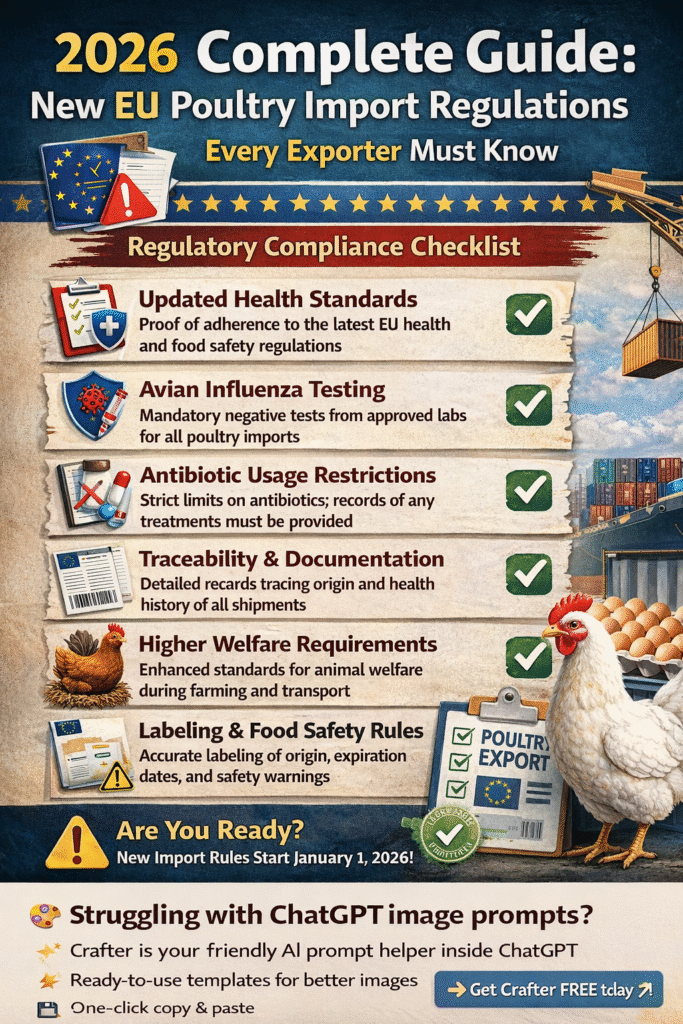
🎯 🎯 The European Union has introduced stringent poultry import regulations in 2026 that fundamentally transform how exporters operate. Therefore, understanding the 2026 Complete Guide: New EU Poultry Import Regulations Every Exporter Must Know becomes critical for maintaining market access. These updated requirements address food safety, traceability, and animal welfare concerns. Furthermore, non-compliance can result in shipment rejections and substantial financial losses 📊. Our comprehensive Export Services team has analyzed every regulatory change to help exporters navigate this complex landscape successfully. 🔑 Understanding the 2026 Complete Guide: New EU Poultry Import Regulations Every Exporter Must Know The 2026 regulatory framework introduces enhanced traceability systems and digital certification processes that exporters must implement immediately ✅. Additionally, the EU now requires blockchain-based tracking for all poultry shipments entering member states. This technology ensures complete supply chain transparency from farm to border 🔗. Moreover, exporters must register with the European Food Safety Authority’s new digital portal by June 2026. Our Products division assists clients with compliant sourcing and documentation. Therefore, early adoption of these systems provides competitive advantages in European markets. ✅ Mandatory Veterinary Certification Requirements for 2026 European authorities now mandate ISO 17065-accredited veterinary certificates for all poultry imports effective January 2026 📋. Furthermore, certificates must include complete antibiotic usage histories for the preceding 90 days. The EU has banned 14 additional veterinary medications commonly used outside Europe this year ⚠️. Additionally, all certifying veterinarians must complete EU-recognized training programs before issuing export documentation. Each certificate requires digital signatures verified through the EU’s TRACES NT system. However, exporters who maintain certified supplier networks experience faster customs clearance and reduced inspection rates. 💡 Enhanced Food Safety and Pathogen Control Standards The 2026 regulations establish zero-tolerance policies for Salmonella enteritidis and Campylobacter in processed poultry products 🦠. Therefore, exporters must implement Hazard Analysis Critical Control Points (HACCP) systems audited quarterly by EU-approved bodies. Additionally, mandatory pathogen testing must occur at three distinct supply chain stages. The EU now requires environmental monitoring programs at all production facilities shipping to European markets 🧪. Moreover, cold chain documentation must demonstrate unbroken temperature control from processing to port of entry. These stringent measures reflect consumer demands for safer poultry products across Europe. 🚀 Digital Documentation and Customs Clearance Procedures The EU’s new Automated Import System (AIS-2026) revolutionizes how exporters submit documentation and track shipments 💻. Furthermore, all export health certificates must be submitted electronically at least 72 hours before departure. The system integrates with customs authorities across all 27 member states for streamlined processing. According to European Commission food safety data, digital submissions reduce clearance times by 40% compared to paper systems ⚡. Additionally, exporters receive real-time notifications about inspection requirements and documentation deficiencies. However, technical failures or incomplete submissions trigger automatic shipment holds at EU borders. 📌 Animal Welfare Compliance and Audit Requirements European regulations now mandate comprehensive animal welfare audits for all poultry export facilities biannually 🐔. Therefore, production systems must meet EU Directive 2026/43 standards regarding stocking densities and environmental enrichment. Additionally, transport conditions require verification through GPS-enabled monitoring devices during international shipments. The EU has established maximum journey times of 8 hours for live poultry exports to member states ⏱️. Moreover, facilities must demonstrate compliance with the Five Freedoms framework through documented welfare assessments. Furthermore, third-party certification from bodies like Global Animal Partnership enhances approval prospects significantly. CONCLUSION + CTA ⚡ Successfully navigating the 2026 Complete Guide: New EU Poultry Import Regulations Every Exporter Must Know requires proactive compliance strategies and expert guidance. Therefore, exporters must invest in digital systems, veterinary partnerships, and facility upgrades to maintain European market access 🎯. Additionally, staying informed about evolving requirements prevents costly shipment rejections and market disruptions. Our team at GFNCC provides comprehensive support for exporters adapting to these regulatory changes. Contact our Contact specialists today to ensure your poultry export operations meet all 2026 EU compliance standards successfully 📞.